




 Spacemiles - Collect discount -
5-MeO-DMT: Understand its effects, risks, natural and synthetic sources, and interest in research

5-MeO-DMT: Understand its effects, risks, natural and synthetic sources, and interest in research
One puff, breathe in, breathe out, and you can enter a whole new universe, speak to gods, and live a thousand years. It's this kind of reputation that has made 5-MeO-DMT, also known as the psychedelic toad, such a famous substance. But the real story is more complicated than what most of the online hype would make you think. This short-acting psychedelic tryptamine has extremely potent effects, potential dangers to consider, and is at the center of so many clinical research programs that some consider it to be a miracle drug.
So, what is 5-MeO-DMT exactly? In this Sirius blog, I take a deep dive into the origins, pharmacology, subjective effects, dosage, and interaction problems, and the latest news on the ongoing clinical trials. With 5-MeO-DMT, a short trip does not mean a light trip, so let’s get a few facts straight before talking about what is believed to be true and what is being investigated in the context of mental health.
What is 5-MeO-DMT?
5-MeO-DMT (full name 5-methoxy-N,N-dimethyltryptamine), is a powerful tryptamine psychedelic sometimes also called mebufotenin. Its chemical formula is C13H18N2O. Structurally, it combines an indole system, an ethylamine side chain, and a methoxy group at the fifth position. That small group helps make it pharmacologically and experientially different from ordinary N,N-DMT.
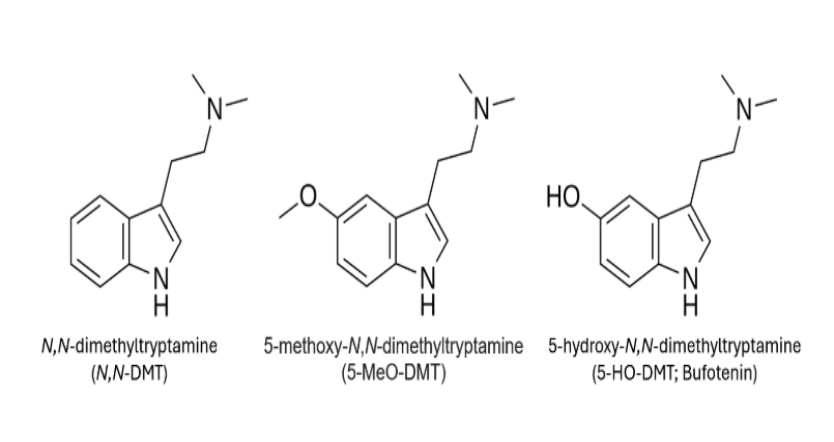
The compound is naturally secreted in the glands of the Sonoran Desert toad, Incilius alvarius, as a defense mechanism against predators. It has also been reported in several plants, especially South American snuff sources such as multiple Virola species, Anadenanthera peregrina, and Dictyoloma incanescens. Today, modern pharmaceutical research uses synthetic, standardized material, but it is the same molecule found in the toad venom. Although older studies reported traces in human fluids or possible biosynthetic pathways, currently, no normal human function has been established as being able to produce 5-MeO-DMT.
A quick naming check before we go deeper
Search results can get chaotic. You may see the same substance being written in different ways: 5-methoxy dimethyltryptamine, 5-meo – dmt, or even MeO-DMT. Generally, these terms typically all describe the actual 5-MeO-DMT molecule, but to be honest, a vendor that does not know how to properly write it should not be trusted. Meanwhile n,n-dimethyltryptamine refers to the ‘regular’ DMT molecule, which is quite similar but has different pharmacology, effect profile, potency,... Bufotenine, on the other hand, is indeed directly linked to 5-MeO-DMT, as it is the name of one of its active metabolites. Another chemical term you might mix up in the context is N-acetyl-5-methoxy tryptamine. This one describes melatonin, a naturally produced hormone in the human body that regulates sleep and has no psychedelic effects whatsoever.
The history of 5-MeO-DMT
Indigenous tribes in South America have used psychoactive snuffs such as yopo, cohoba, paricá and epena for centuries, with some traditions reaching back thousands of years. These preparations came from plants such as Anadenanthera and Virola. Their chemistry varies a lot by recipe, and bufotenine or DMT may be present in some of them, but not every ancient snuff is mainly a 5-MeO-DMT preparation. If you want to know more about the history and practices associated with psychedelics, you can read Sirius’s blog on the history of psychedelics.
Surprisingly, there is no solid evidence that Indigenous American communities traditionally used Sonoran Desert toad secretion as a psychedelic before the modern period. Linking today’s famous “toad medicine” directly to ancient, somewhat forgotten medicine may sound cool, but the historical support is weak.
Curious to explore some of the plants connected to these ancient traditions? At Sirius, you can also explore Yopo seeds (Anadenanthera peregrina) and Cebil seeds (Anadenanthera colubrina), two fascinating botanicals with a rich history in South American Indigenous cultures. Discover more about these remarkable plants and check their current availability in our online Smartshop.
From a chemistry paper to the modern psychedelic scene
Japanese chemists Toshio Hoshino and Kenya Shimodaira first synthesized 5-MeO-DMT in 1936. Researchers later identified it in plants and, during the 1960s, in toad secretion. Human reports of the effect of the drug quickly followed. In 1984, Ken Nelson, writing under the alias Albert Most, published a pamphlet called Bufo alvarius: the PSYCHEDELIC TOAD of the sonoran desert, which helped popularize vaporized toad secretion in the West.
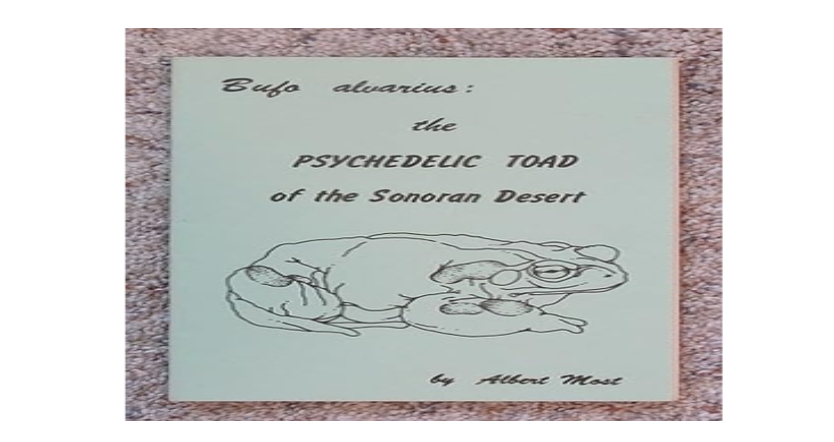
People who search for how to make 5-MeO-DMT are often curious about its history as a research molecule. Fair enough, chemistry is fascinating, but the legal status of manufacturing 5-MeO-DMT varies between jurisdictions and may involve strict controls. You will not find a recipe for how to synthesize 5-MeO-DMT on this page, but you can find methods if you read a scientific paper or get your hands on a copy of Albert Most's book, expanded and updated by Hamilton Morris! Modern research uses controlled manufacturing, identity testing, and strict manufacturing practices to ensure the safety and stability of the compounds.
The 5-MeO-DMT toad, plants, and synthetic material
The animal behind the headlines is the Sonoran Desert toad, sometimes also called the Colorado River toad. Its most recent scientific name is Incilius alvarius, and Bufo alvarius is the older name. Glands behind its eyes and under its skin release a defensive mixture containing 5-MeO-DMT and other compounds. It is sometimes called “venom” for simplicity, although defensive secretion is more precise. Either way, this is not a cute natural vape liquid right off the toad, and collecting the secretion can cause significant stress and contribute to wider ecological pressure on wild populations. These secretions exist to deter predators and may contain substances you do not want in an untested human product. Licking a hallucinogenic toad is unreliable and potentially dangerous because other secreted compounds can be toxic when swallowed.
Why synthetic 5-MeO-DMT makes more sense
Properly produced synthetic 5-MeO-DMT is generally much easier to identify, test, and dose than dried toad secretion, which can contain a mix of 5-MeO-DMT, bufotenine and other compounds. Synthetic material can appear in different chemical forms. 5-MeO-DMT freebase is the unprotonated form, usually associated with vaporisation because it volatilises more cleanly and at lower temperatures. 5-MeO-DMT HCl is the hydrochloride salt, a more water-soluble and stable form that has different physical properties and is not automatically dose-equivalent to the freebase form. Knowing if you are dealing with the freebase or the HCl matter because dose, purity, and consumption can all change the experience between the two.
Synthetic production also avoids capturing, handling or repeatedly stressing wild Sonoran Desert toads. Rising demand for toad-derived material has been linked to poaching, irresponsible milking practices and wider conservation pressure on populations already affected by habitat loss, drought and disease. Some users still describe natural and synthetic sessions differently, but setting, expectations, ritual and dose can strongly shape how any psychedelic experience feels. Chemically speaking, the 5-MeO-DMT molecule does not have an intrinsic spiritual component. Synthetic material can produce the same core effects while offering more consistent dosing and avoiding unnecessary harm to wildlife.
Disclaimer: Sirius does not endorse the use or purchase of synthetic psychoactive substances, including 5-MeO-DMT. While synthetic 5-MeO-DMT is often considered a more ethical alternative to harvesting secretions from wild Sonoran Desert toads, Sirius strongly discourages purchasing from unregulated drug markets, where substances may contain harmful chemicals or be mislabeled. We advocate for protecting both human health and wildlife.
How does 5-MeO-DMT work?
5-MeO-DMT interacts with several serotonin receptors. It has a very high affinity for 5-HT2A, the receptor associated with classic psychedelic effects such as those of psilocybin found in Magic Truffles and LSD. A 2024 study led by Daniel Wacker’s team showed how 5-MeO-DMT can also bind to the 5-HT1A receptor. Strong 5-HT1A activity may help explain why the experience is often less visually elaborate and more centered on self-dissolution, bodily intensity, and unity. “May” matters: receptor binding does not translate directly to one psychological effect. Researchers are still working out how 5-HT1A, 5-HT2A, and wider neuronal networks interact. Here at Sirius, you can find a simple guide to understanding agonists, receptors, and neurotransmission, all related to psychedelics.
5-MeO-DMT metabolism
The body primarily breaks down 5-MeO-DMT via monoamine oxidase A (MAO-A). Another pathway involves the CYP2D6 enzyme, which converts some of the 5-MeO-DMT into 5-HO-DMT, aka bufotenine, a pharmacologically active metabolite. The fact that a primary metabolite of 5-MeO-DMT, 5-HO-DMT, also elicits its how psychedelic effects complicates the picture a little bit… This means that when you consume 5-MeO-DMT, your body will naturally process some of it into bufotenine, which will in turn also have its own effects, making the pharmacology behind 5-HO-DMT a lot more complex. On top of that, other factors will affect what happens to the drug once consumed, such as genetics, medications you may take, administration route, and formulation, all potentially leading to slight differences in the way you metabolize the substance and, therefore, change the effects you feel.
In any case, MAO inhibitors strongly impact the way 5-MeO-DMT works in the body by interfering with its metabolism. In fact, any drug blocking a main breakdown pathway can make the response much stronger, longer, and less predictable, more on that later…
5-MeO-DMT vs DMT: similar name, very different trip
The 5-MeO-DMT vs DMT (N,N-DMT) debate comes up constantly, and for good reason. Both are short-acting tryptamines, but they are really not the same. In chemical terms, 5-MeO-DMT is a methoxylated version of N,N-DMT. In terms of effects, the two drugs will give different experiences, so although their molecular structures and names are very similar, you should know exactly what you are dealing with and what to expect before consuming. If you want to learn everything about this similar molecule, you can check out the Sirius blog on DMT for a deeper look. For a quick overview of the differences between 5-MeO-DMT and DMT, see the points below:
- Main characteristics: 5-MeO-DMT is often described as more ego-dissolving, with profound alterations in the sense of self, hallucinations at some doses, and intense bodily sensations. DMT, however, is often described as very visually rich, with spatial distortions and hallucinations that are filled with changing imagery, and it may be less dissociative than 5-MeO-DMT.
- Visuals: In 5-MeO-DMT, visuals are often described as being reduced, primarily white, abstract or sometimes absent- but this is not always the case. It tends to really depend on the dose, but the person and route of administration will also have an impact. DMT visuals, however, are commonly very vivid and intense. Visuals such as geometric shapes and highly detailed, complex structures are quite characteristic of a DMT high.
- Sense of self: When under 5-MeO-DMT, the sense of self can disappear rapidly and almost completely. This is sometimes referred to as an ego death and is a very short and extremely intense emotional experience. DMT experience may change dramatically between people when it comes to the effects on the sense of self, though it is quite common to keep a sense of self, and ego death may occur only at high doses.
- Timing: 5-MeO-DMT has an extremely rapid onset and a short peak when inhaled, which is the usual consumption route. Recovery after the peak varies between individuals, but the whole experience (come up, peak, plateau, come down) usually lasts around 15 minutes in total. DMT also has a very rapid onset when inhaled, and the experience is quite similar in terms of timing, but in any case, timing depends on the administration route. In both cases, because the experience is very intense, you may still feel disoriented even after the effects are over.
- Pharmacology: 5-MeO-DMT has a particularly strong affinity for the 5-HT1A receptor, while 5-HT2A activity still appears important for its psychedelic profile. The full picture is probably not one receptor doing all the work, but a balance between 5-HT1A, 5-HT2A and other serotonin targets such as 5-HT1D, 5-HT2C, 5-HT6 and 5-HT7. DMT has a different receptor balance, with strong relevance of 5-HT2A and 5-HT2C and additional activity reported at targets such as 5-HT1A, sigma-1 receptors, TAAR1 and monoamine transporters. So, some differences between N,N-DMT and 5-MeO-DMT may come from this wider pharmacological profile, but it is still too early to match every subjective effect or side effect to one specific receptor.
So, N,N-DMT vs 5-MeO-DMT is not a contest over which one is “stronger.” The better question is what kind of intensity each produces. People who have never tried either or even both often underestimate how different their typical subjective effect profiles can be.
What can a 5-MeO-DMT experience feel like?
A 5-MeO-DMT experience is probably one of the most difficult states of consciousness to explain, both because of its nature and strength. When inhaled, 5-MeO-DMT effects arrive within seconds. Your body may seem to expand, melt, or even completely disappear. The boundaries between yourself (“me”) and everything else vanish both physically and conceptually. Online trip reports often mention oceanic boundlessness, whiteout, void, universal awareness, and unity. As the trip can be intense and unsettling, people sometimes also experience fear, confusion, or the conviction that they are dying, which should not be underestimated. This shows that when it comes to subjective effects, what feels liberating to one person may terrify another.
The entire span of the high is very short compared to LSD (between 8 and 12h) or psilocybin (around 4 to 6h), but it is not always completely over after ten minutes. Consumption method, formulation, dose, and biology matter, and emotional processing or an afterglow may continue afterward for an extended period of time that can last over multiple days.
Are 5-MeO-DMT visuals really absent?
5-MeO-DMT visuals are usually less dominant, detailed, and colorful than those associated with N,N-DMT, but that does not mean they are always completely absent. Some people report a uniform field of white light or darkness, while others describe almost no visuals because the experience is dominated by bodily sensations, emotional intensity, and the loss of self-awareness. Depending on the dose, you may see geometric patterns, flashes of light, dreamlike scenes, or changes in the apparent size and shape of the surrounding space. At lower doses, visual distortions may remain easier to notice, while a very intense experience can become so immersive that the usual distinction between seeing, feeling, and thinking usually disappears. It isn’t true that 5-MeO-DMT has no visuals, but its visual effects are often simpler and less central to the experience compared to N,N-DMT.
Forms, routes, and 5-MeO-DMT dosage
There is no universal 5-MeO-DMT dose, especially with unregulated products. Concentration, hardware, heating, and the material itself can all change how much actually reaches the body.
- 5-MeO-DMT cartridge: There is no dependable dose-per-puff estimate. Controlled studies with precisely measured vaporised formulations have tested total doses of around 2–18 mg, but that range cannot be converted into seconds of inhalation from a random cartridge. The liquid concentration and amount delivered by each puff may be unknown.
- Dried toad secretion: Observational settings have commonly reported amounts around 40–60 mg of dried material, including 50 mg in a published study. If a sample contained roughly 20–30% 5-MeO-DMT, that could represent around 8–18 mg of the compound, but natural secretion varies considerably and also contains other substances.
That is why advice such as “take a five-second pull” or “use a fixed amount of venom” is unreliable. With both cartridges and dried toad secretion, the number on paper may say very little about the dose actually delivered.
Why is there no universal 5-MeO-DMT dose?
It is very important to understand that it is almost impossible to give an exact dose recommendation of 5-MeO-DMT, and there is no magic number to trust blindly. Clinical doses are carefully studied doses of pure, tested formulations of 5-MeO-DMT administered using calibrated devices and supervised protocols. They cannot simply be copied to a random powder, toad secretion, or pen cartridge. Even a small change in a 5-MeO-DMT dose can produce a major jump in intensity, while the concentration of an unregulated 5-MeO-DMT cartridge may be unknown. Puff-time advice such as “inhale for five seconds” is therefore unreliable, because different coils, temperatures, and liquids can deliver very different amounts in the same time.
Risks, interactions, and harm reduction
Acute risks can include panic, vomiting, confusion, loss of coordination, involuntary movements, temporary unresponsiveness, cardiovascular changes, falls, and choking on vomit. Never combine 5-MeO-DMT with MAO inhibitors, including pharmaceutical MAOIs, Syrian Rue, harmalas, or ayahuasca-style mixtures. This can dangerously intensify and prolong the effects, with reported cases of serotonin toxicity, overheating, seizures, and death. Other serotonergic medication also requires medical review. Never stop using an SSRI, SNRI, or prescribed medicine without talking to a physician.
- Do not combine 5-MeO-DMT with MAOIs, harmalas, or unknown drug mixtures.
- Do not use it alone. A sober, capable observer, also known as a trip sitter, should remain present throughout the acute and recovery periods.
- Keep the space away from traffic, heights, hard edges, open flames, and large bodies of water. Temporary loss of movement control is common when high on 5-MeO-DMT.
- If someone around you seems too high on 5-MeO-DMT, avoid unnecessary touching or restraint. Intervention should focus on immediate physical safety and breathing, not on forcing someone to behave calmly and focus.
- People with cardiovascular disease, a history of psychosis or mania, pregnancy, or unstable mental health may face higher risks. Use should therefore be avoided without appropriate medical guidance.
- Call emergency services for breathing difficulty, seizure, dangerous overheating, injury, persistent unresponsiveness, or suspected serotonin toxicity.
For a broader overview of risky drug interactions, see our encyclopedia page on Dangerous combinations.
5-MeO-DMT research into depression
Most 5-MeO-DMT research currently focuses on mental health, especially treatment-resistant depression, but it is also being investigated for anxiety, substance-use disorders, trauma-related symptoms, psychological flexibility, neuroplasticity, and to understand intense mystical-type experiences. Scientists are still working out whether any lasting benefits come mainly from serotonin-receptor activity, changes in brain plasticity, the subjective experience itself, or a combination of all three.
Depression studies provide some of the clearest examples so far. GH001, an inhaled pharmaceutical formulation of 5-MeO-DMT, produced rapid improvements in a controlled Phase 2b trial involving people with treatment-resistant depression. BPL-003, an intranasal formulation, has also shown encouraging results in early clinical studies. These suggest that carefully prepared 5-MeO-DMT medicines may have therapeutic value, but they do not yet prove that every form, dose, or setting produces the same outcome and is safe for everyone.
5-MeO-DMT retreats, legal status and availability
Seeing a polished website and spiritual vocabulary does not guarantee a safe or competent retreat! A responsible 5-MeO-DMT retreat should:
- Provide medical and psychological screening from qualified personnel
- Clearly identify the substance and route
- Offer sober one-to-one supervision
- Explain consent around touch
- Prepare for emergencies, and include follow-up support.
Be extremely cautious of miracle claims, secret ingredients, or gurus who dismiss serious mental and physical distress.
Legal status and availability
In the Netherlands, the legal status of 5-MeO-DMT is more complicated than it might seem. While DMT is explicitly listed under the Opium Act, 5-MeO-DMT is not named separately. Certain Dutch drug-monitoring reports classify it as prohibited through schemes covering ethers and esters of controlled substances, including DMT and Bufotenine derivatives, under which 5-MeO-DMT may fall. However, DRUGSinfo, a service of the official Trimbos Institute, currently states that 5-MeO-DMT is not prohibited under the Opium Act and instead falls under the Warenwet (Commodities Act). Additionally, the generic designer-drug ban introduced in July 2025 does not cover tryptamines as a group.
This does not mean that 5-MeO-DMT can be marketed or sold without restrictions. Product safety regulations and other applicable laws still matter, and the legal situation and consequences vary widely between countries. Searches such as 5-MeO-DMT for sale, buy 5-MeO-DMT, buy 5-MeO-DMT online, and where to get 5-MeO-DMT may lead to unregulated vendors or retreat marketing. Labels such as "research use only" do not guarantee legality, identity, or purity. Sirius does not sell 5-MeO-DMT, and this blog is not a sourcing guide.
Legal disclaimer: Laws and regulations concerning 5-MeO-DMT and other psychoactive substances can change rapidly. The information provided in this blog reflects the legal situation at the time of writing and may no longer be accurate when you read it. Always consult the latest official legislation and regulations in your country before making any decisions regarding these substances. This content is for informational purposes only and should not be considered legal advice.
5-MeO-DMT: powerful, promising, and still not a magic cure
5-MeO-DMT sits in a strange place between ancient plant traditions, toad venom ceremonies, underground use, and serious pharmaceutical research. Its effects can arrive within seconds and disappear quickly, but that does not make the experience simple, predictable, or risk-free. The differences between synthetic material, dried toad secretion, and unregulated cartridges matter, as do dose, setting, medication use, and the presence of a knowledgeable trip sitter.
At the same time, early 5-MeO-DMT research into depression and other mental-health conditions gives scientists good reasons to keep investigating it. 5-MeO-DMT is therefore neither a miracle medicine nor an extremely dangerous mystery. It is an extremely potent psychedelic with real therapeutic potential, major unanswered questions, and a need for careful, evidence-based discussion. Stay curious, keep the hype in check, and read more Sirius.nl blogs to learn more about other drugs and trends!
Did you enjoy reading this article and do you like to write yourself? We are always looking for people who share our passion for natural products, who can also translate this into great texts. And we have an interesting reward for this. View all information for writers.
 Blog Health
Having a hard time relaxing? Here are 8 tips to become zen
Stress can take many forms. Maybe you implode when you are tense. Or maybe you cram a lot of cookies down your throat as a coping mechanism. Or you st [..]
19-02-2020
6 minutes
Blog Health
Having a hard time relaxing? Here are 8 tips to become zen
Stress can take many forms. Maybe you implode when you are tense. Or maybe you cram a lot of cookies down your throat as a coping mechanism. Or you st [..]
19-02-2020
6 minutes
 Blog Vaporizers
Smoking: My nicotine addiction
Smoking tobacco is increasingly discouraged. Where you used to see just about every respectable figure with a cigarette, pipe or cigar between his lip [..]
20-09-2021
8 minutes
Blog Vaporizers
Smoking: My nicotine addiction
Smoking tobacco is increasingly discouraged. Where you used to see just about every respectable figure with a cigarette, pipe or cigar between his lip [..]
20-09-2021
8 minutes
 Blog Health
Can you treat depression with a turmeric supplement?
The wide range of turmeric supplements is flying around you like leaves in Autumn. You can find them in every drugstore and the level of quality varie [..]
Blog Health
Can you treat depression with a turmeric supplement?
The wide range of turmeric supplements is flying around you like leaves in Autumn. You can find them in every drugstore and the level of quality varie [..]



 Nederlands
 Italiano
 Deutsch
 Français
 Português
 Español
 Polski